July 28, 2026
Your toddler is up at 5am, padding into your room with zero guilt and maximum energy. You've heard about ok-to-wake clocks, you're pretty sure they can help, but you're not sure if your child is actually old enough to understand one or whether you're just adding another thing to the bedtime routine that won't work.
Here's what you need to know before you buy.
Quick Answer
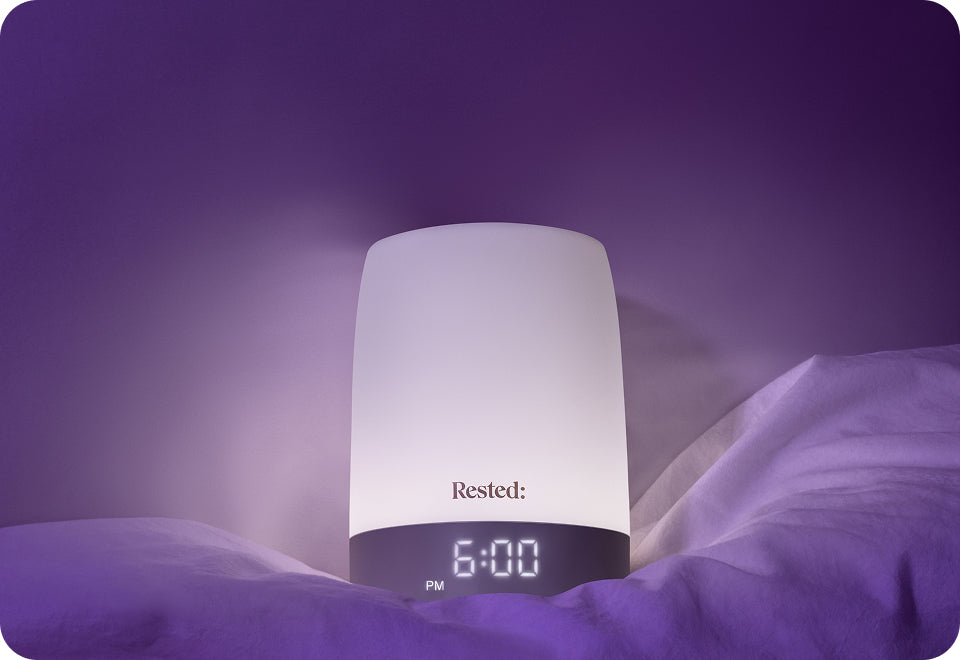
Most children are ready for an ok-to-wake clock somewhere between 18 months and 3 years, with the sweet spot being around 2 to 2.5 years when they can follow a simple visual rule. The Sounds & Stories from Rested includes a built-in ok-to-wake light alongside a sound machine and sleep stories, so it handles the whole bedtime environment in one device rather than adding a separate gadget to the room.
What an ok-to-wake clock actually does
The idea is simple. The light changes colour at a time you set, giving your child a visual cue they can understand without being able to read a clock. Instead of asking a two-year-old to interpret numbers, you're saying: green means go, orange means stay.
It works because young children respond well to consistent, concrete signals. The clock removes the grey area. There is no negotiating with a colour.
The right age to start
Under 18 months: usually too early
Babies and very young toddlers don't have the cognitive ability to connect a light colour to a rule about staying in bed. Introducing one before around 18 months tends to frustrate parents more than help them, because the child genuinely cannot do what you're asking.
That doesn't mean a night light or sound machine isn't useful at this age. Both can help with settling. But the ok-to-wake function specifically needs a child who can understand and remember a two-step rule.
18 months to 2 years: worth trialling
Some children at this age are ready, especially if they're verbal, respond well to visual routines and are already sleeping in a toddler bed. Start with very short windows, setting the ok-to-wake light only ten to fifteen minutes after your child usually wakes. You're not trying to buy an extra hour of sleep overnight. You're teaching the concept.
Keep the rule extremely simple. Something like: when the light is orange, we wait. When it turns green, we come and get mum. Repeat it at bedtime every night for at least two weeks before you expect it to land.
2 to 3 years: the sweet spot
This is the age range where most families see the biggest shift. Children at this stage understand cause and effect, enjoy following rules they feel ownership over, and are motivated by the small win of getting it right.
The 2 to 3 year window is also when early waking tends to peak, often because children are transitioning out of a nap or going through a developmental leap. An ok-to-wake light gives them something to anchor to when they wake before everyone else is ready.
3 years and older: still absolutely worth it
There is no upper age limit on usefulness here. Plenty of four and five year olds benefit from the visual structure, especially strong-willed kids who respond better to a neutral rule than a parent instruction. If your child has been waking early for a while, don't assume it's too late to introduce one. It's not.
How to set it up so it actually works
Introduce it as a special new thing, not a rule
Let your child see the device before bedtime. Show them how the light changes. Make it a moment of excitement, not a new restriction. Children are far more likely to buy in when they feel like a participant rather than the subject of a new system.
Set the wake time conservatively at first
If your child usually wakes at 5.30am, set the ok-to-wake light for 5.45am. Not 6.30am. You need early wins to build the habit. Once your child has successfully waited for the light two or three times, you can push it by fifteen minute increments over the following weeks.
Use consistent language every night
Before sleep, remind your child of the rule in the same words every time. Something like: when the light is orange, it's still sleep time. When it turns green, you can come get me. Repetition is what makes the cue stick.
Make sure the room is dark enough for the light to read clearly
If the room is too bright in the morning, your child may not be able to distinguish the colour change. Australian summer mornings can mean light sneaking in from 5am onwards. Block-out curtains or blinds make a real difference here, giving the ok-to-wake light the contrast it needs to be visible.
Choosing a device that does more than one job
A dedicated ok-to-wake clock is one option, but many families find it easier to have a single device that handles the whole sleep environment: sound, light, stories and the wake signal together.
The Sounds & Stories from Rested is built specifically for this. It has 40 sounds, 10 original narrated sleep stories including five set in Australia, a gentle night light and a built-in ok-to-wake light. There's no Wi-Fi required and no subscription. Everything works from physical buttons, which matters when you're setting it up at 7pm and do not want to troubleshoot an app.
It comes with a 100-night trial, which is genuinely useful when you're introducing something new into a child's sleep routine. Some kids take to it in a week. Others need closer to a month before the light really registers as a cue.
What to do when the ok-to-wake light stops working
If your child understood the light and then stopped following it, that's normal. Children test boundaries during developmental leaps, illness and any kind of change in routine. Go back to basics: reintroduce the concept as if it's new, lower the wake time again and rebuild the habit.
If the light never really landed, check a few things. Is the wake time realistic for your child's natural rhythm? Is the room dark enough for the light to be visible? Is the language consistent between caregivers? Often one of these three things is the gap.
Travel, grandparents and the portability problem
One of the quieter frustrations with ok-to-wake clocks is that they live in one room. The sleep cue you've spent weeks building doesn't travel to the grandparents' house, or work in the car on a long drive, or help settle your child in the pram on a weekend away.
This is where the Sounds & Stories Mini becomes genuinely useful. It's the portable version of the home unit, with 30 sounds and 5 stories, a soft night light and a silicone strap that clips to a pram, bag or car seat. The battery runs 12 to 18 hours on a charge and it uses USB-C.
The detail that matters most: it plays the same sounds and stories as the home Sounds & Stories. So the sleep cue your child has built at home transfers. The Mini goes in the bag when you visit family, comes on the plane, stays in the car. Because the sounds are consistent, the signal works wherever the child is, not just in their bedroom.
A lot of Rested families end up with both: one at home, one for everywhere else. It's a practical setup rather than a marketing one, because the whole point of an ok-to-wake system is consistency, and consistency is harder when the device only exists in one place.
Orders over $75 at rested.com.au include free shipping, which applies when you pick up both devices together.
A quick summary
The right age to start is somewhere between 18 months and 3 years for most children, with 2 to 2.5 years being when it tends to click. Start with a conservative wake time, use the same language every night, and make sure the room is dark enough for the light to be visible.
If you want a device that handles the full sleep environment rather than just the wake signal, the Sounds & Stories from Rested does that in one unit. And if travel or split households are part of your life, pairing it with the Mini means the sleep cue your child has learned at home can follow them anywhere.
Frequently Asked Questions
Can a one-year-old use an ok-to-wake clock?
Most one-year-olds don't yet have the cognitive ability to connect a light colour to a rule about waiting. A night light or sound machine can still be helpful for settling at this age, but the ok-to-wake function specifically tends to work better from around 18 months onwards, and more reliably closer to two years.
How long does it take for an ok-to-wake clock to work?
For most children, it takes two to four weeks of consistent use before the light becomes a reliable cue. Some children get it faster, especially if they're verbal and respond well to routine. The key is keeping the language consistent between all caregivers and starting with a wake time that's only slightly later than your child's natural waking time.
What if my child wakes up and ignores the light?
This is very common in the early weeks. Go back to basics: lower the set wake time to something achievable, remind your child of the rule at bedtime every night and make sure the room is dark enough for the colour to be visible. Rebuilding the habit from a point of success is more effective than holding firm on a wake time that's too far from your child's natural rhythm.
Does the ok-to-wake light work when we travel or stay at grandparents?
A device that stays at home means the sleep cue doesn't travel with your child. The Sounds & Stories Mini is designed for exactly this problem. It plays the same sounds and stories as the home Sounds & Stories, so the cue your child has built transfers to the pram, the car or a stay away from home.
Is there a difference between an ok-to-wake clock and a regular night light?
A regular night light stays on at a fixed brightness through the night. An ok-to-wake light changes colour or turns on at a set time to signal when it's okay to get up. The colour change is the cue your child learns to read. Some devices, like the Sounds & Stories from Rested, combine both functions so the room has gentle light overnight and the ok-to-wake signal appears at the time you choose.