September 24, 2026
Your toddler is standing at your bedside at 5am, completely awake, completely cheerful, and completely unaware that it is not a reasonable hour. You have tried earlier bedtimes, later bedtimes, blackout blinds, and sheer willpower. Nothing sticks.
Early waking is one of the most common toddler sleep complaints, and it is genuinely exhausting. The good news is that an ok-to-wake clock is one of the few practical tools that can actually shift things, as long as you use it correctly.
Quick Answer
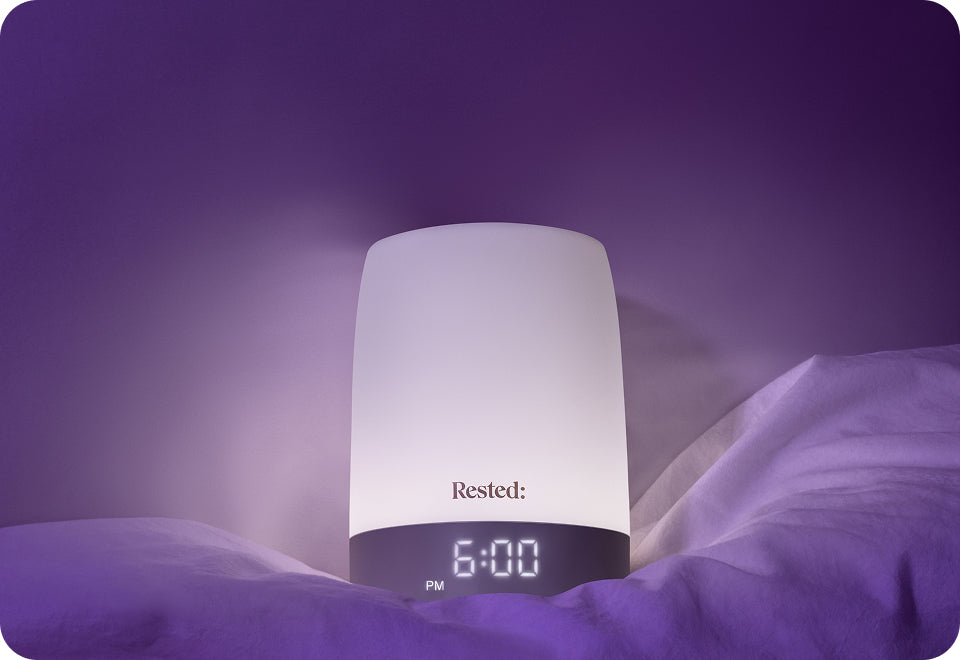
An ok-to-wake clock gives a toddler a visual cue they can understand: the light is off, it is still sleep time; the light turns on, now you can get up. For it to work, you need to introduce it gradually, with consistent reinforcement, not just plug it in and hope. The Sounds & Stories device from Rested includes a built-in ok-to-wake light alongside a night light, clock, sleep sounds and original narrated stories, so the whole sleep environment is working together.
An ok-to-wake clock gives a toddler a visual cue they can understand: the light is off, it is still sleep time; the light turns on, now you can get up. For it to work, you need to introduce it gradually, with consistent reinforcement, not just plug it in and hope. The Sounds & Stories device from Rested includes a built-in ok-to-wake light alongside a night light, clock, sleep sounds and original narrated stories, so the whole sleep environment is working together.
Why Toddlers Wake So Early
Before you fix the problem, it helps to know why it is happening. Most early waking in toddlers comes down to one of three things: sleep pressure that has run out too early, light entering the room, or a body clock that has simply shifted forward.
Around ages two to four, sleep cycles become lighter in the early morning hours, usually from about 4:30am. If your toddler rouses slightly during that time and there is any stimulation, including light through curtains, a sound from outside, or the habit of someone appearing when they call out, they are likely to wake fully instead of rolling back into sleep.
Check the room first
In Australia, spring and summer mornings can flood a room with light by 5am or earlier, especially in Queensland and Western Australia. If you have not already, proper blackout blinds are step one. Even small gaps around curtain edges can be enough to trigger a wake-up in a sensitive sleeper.
A soft amber night light in the room overnight, rather than complete darkness, can also help some toddlers settle back without fully waking. Many ok-to-wake devices include this feature, which is worth factoring in when you choose one.
How an Ok-to-Wake Clock Actually Works
The concept is simple: instead of a toddler deciding when to get up, the clock decides. When the light is off or a certain colour, they stay in bed. When the light changes, they are allowed to come out. It teaches time, but through a visual they can actually process at two or three years old, rather than numbers they cannot yet read.
The key word there is teaches. This is not a switch you flick once and the problem is solved. It takes about two to four weeks of consistent reinforcement for most toddlers to genuinely understand and respect the light.
Setting a realistic wake time
This is where many parents go wrong. If your toddler is currently waking at 5am, setting the ok-to-wake light to turn on at 6:30am on day one is setting everyone up to fail. The toddler will not wait ninety minutes if they are not developmentally ready for it, and they will lose faith in the system entirely.
Instead, start just fifteen to twenty minutes later than their current natural wake-up. So if they rise at 5am, set the light for 5:15am this week. Then 5:30am next week. Then 5:45am. This graduated approach builds the association slowly and gives them small wins that actually mean something.
Reinforcing the rule in the daytime
Talk about the light during the day, when nobody is tired and nobody is frustrated. Show them how it works. Practise it as a game. Make it a point of pride: you are such a big kid, you know how to wait for the yellow light. Toddlers respond to mastery and to pride in a way they rarely respond to rules issued at 5am when everyone is half asleep.
What to Look for in an Ok-to-Wake Device
Not all ok-to-wake clocks are built equally, and several features genuinely matter for Australian families.
Physical buttons, not just an app
App-dependent devices sound convenient until you are adjusting your child's sleep light at midnight and the Wi-Fi drops. A device that works fully via physical buttons, without needing a phone or an internet connection, is more reliable night to night.
The Sounds & Stories device from Rested works completely via physical buttons and requires no Wi-Fi. The app is optional, not required, which means it works on camping trips, at grandparents' houses, and during outages.
Sleep sounds in the same device
If you are investing in a sleep tool for your toddler's room, having the ok-to-wake light and the sleep sounds in one device makes the room simpler and the cues more consistent. Sounds & Stories includes forty sleep sounds alongside its ok-to-wake light, a night light, and ten original narrated stories, five of which are set in Australia. Having familiar sounds playing through the early morning light sleep window can help toddlers settle back rather than fully waking.
Stories as a bridge
One underrated trick for early waking is giving a toddler something to do if they wake before the light. Some families tell their child: if you wake up and the light is still off, you can listen to a story quietly in bed. The narrated stories on Sounds & Stories are calm, gentle, and specifically designed to keep a child in a drowsy state rather than stimulating them. This can buy thirty to forty minutes while the ok-to-wake light counts down, which is often enough to reset the habit.
Pairing the Device with a Bedtime Ritual
An ok-to-wake clock helps at the other end of night, but what happens at bedtime still shapes overall sleep quality. A toddler who has a rushed or inconsistent wind-down tends to sleep lighter and wake earlier. A predictable, calming bedtime sequence genuinely does help.
One tool that works quietly in the background is a scent-based ritual. The Sleep Body Wash from Rested is a gentle lavender and magnesium wash for the bath or evening shower, suitable from age three, sulphate free and sensitive skin safe. It starts the wind-down in the bathroom before you have even reached the bedroom.
Following it with the Sleep Balm on wrists, temples or chest completes the ritual. Both the Sleep Body Wash and Sleep Balm share the same MagniRest scent by design. Wash first, balm after, and within a couple of weeks that scent becomes its own signal that sleep is coming. The body starts winding down because it has learned to. It is a conditioned response rather than magic, but a conditioned response is exactly what a toddler's nervous system responds to best.
Rested makes both in Sydney, with certified organic botanicals, and they are designed to be used together as a sequence. The ritual takes about five minutes total and does not require anything else to change in your evening.
What Else Can Help
Nap timing
If your toddler still naps, the timing matters more than most parents realise. A nap that ends after 3pm can reduce overnight sleep pressure enough to cause early waking. Aim to have naps done by 2:30pm, or 2pm for toddlers who are already in that transition zone between one nap and none.
Consistent wake time on your end
This one is uncomfortable but true. If you go in at 5am on Monday, then try to hold until 5:30am on Tuesday, your toddler's body clock is getting mixed signals. Pick a target wake time and be as consistent as possible, including on weekends. The ok-to-wake light helps because it removes the negotiation. The light is the rule, not you.
Bedtime might need to shift slightly later
Counter-intuitively, some early wakers actually benefit from a slightly later bedtime. If your toddler is in bed at 6:30pm and waking at 5am, that is ten and a half hours, which is within a normal range for a three year old. Shifting bedtime to 7pm might push wake-up to 5:30am, then 6am over a couple of weeks. Small changes, patient expectations.
Wrapping Up
Early waking is fixable for most toddlers, but it takes a few consistent weeks rather than a one-night solution. An ok-to-wake clock gives your child a visual they can actually understand and respect, especially when you introduce it gradually and back it up with daytime reinforcement. Pair it with a calming bedtime scent ritual and consistent nap timing, and most families see real improvement within three to four weeks.
If you want to look at everything in one place, Rested brings the sleep tools together at rested.com.au. Sounds & Stories comes with a 100-night trial so you can test it properly over real weeks, not just a few nights. Orders over $75 include free shipping across Australia.
Frequently Asked Questions
At what age can a toddler use an ok-to-wake clock?
Most children start to understand the concept from around two years old, though some need to be closer to two and a half or three before it clicks. The key is that they can connect the light being on or off to a concrete rule. Younger toddlers often understand the concept but lack the impulse control to follow it without very consistent reinforcement from parents.
How long does it take for an ok-to-wake clock to actually work?
For most families, two to four weeks of consistent use is the realistic timeframe. The first week is mostly about introduction and building the association. The second and third weeks are where the habit forms. If you are not seeing any improvement after four weeks, it is worth reviewing the target wake time and whether it is being set gradually enough.
Should I use a sound machine alongside an ok-to-wake clock?
Yes, and ideally in the same device if you can. White noise or gentle nature sounds during the early morning light-sleep window can help a toddler stay drowsy rather than fully waking. The Sounds & Stories device from Rested combines the ok-to-wake light with forty sleep sounds and narrated bedtime stories, which keeps the sleep environment consistent and simple.
Can a bedtime routine really affect early morning waking?
It can, particularly if the routine helps your toddler reach sleep in a calm, regulated state rather than an overtired or wound-up one. A consistent scent ritual, like using the Sleep Body Wash at bath time followed by the Sleep Balm, can condition the body to start winding down at the same point each evening. That kind of conditioned response tends to support deeper, more sustained sleep overnight.
My toddler understands the ok-to-wake clock but still comes in early. What do I do?
Understanding the rule and having the impulse control to follow it are two different things for a toddler. Try giving them something to do while they wait: a quiet story through their sound machine, a soft toy to talk to, or a simple instruction like you can look at your books until the light turns on. Keep returning them to bed calmly and without much interaction until the light is on. It usually takes a few more weeks of this before the habit genuinely holds.