August 11, 2026
You've hit the wall with early mornings. Your toddler is up at 5am, fully awake, fully loud, and you are desperately trying to explain that the sun is not up yet. An ok to wake clock is one of those rare toddler sleep tools that genuinely works, but the options can feel overwhelming when you're shopping bleary-eyed at midnight.
This post breaks down exactly what to look for, what to skip, and which options are actually available and useful in Australia right now.
Quick Answer
The best ok to wake clock for most Australian families is one that combines a clear, child-readable ok-to-wake light with a sound machine and stories, so it anchors the whole bedtime routine rather than just flagging wake time. The Rested Sounds & Stories does exactly that: it plays soothing sounds and original narrated sleep stories at bedtime, then glows green when it's ok for your child to get up. It works entirely via physical buttons with no Wi-Fi required and no subscription.
What Is an Ok to Wake Clock and Does It Actually Work?
An ok to wake clock is a light or clock that changes colour (usually to green) at a parent-set time, giving a toddler a visual cue that it is now ok to leave their room. The concept works because toddlers and young children cannot reliably read a clock, but they can absolutely understand a traffic-light style colour signal.
Most parents see results within one to two weeks of consistent use, usually by ages two and a half to five. The key word is consistent: the light needs to mean the same thing every single day, including weekends and at grandparents' houses.
What to Look for When Buying One in Australia
A light that is genuinely readable from a cot or bed
Some ok to wake clocks glow so faintly that a child in a darkened room simply cannot tell if it has changed. Look for a device with a dedicated coloured light, not just a subtle screen tint. The light should be visible from across the room without being so bright it disrupts sleep itself.
Warm amber or red tones for sleep, green for wake-up is the most common and effective combination. Avoid anything that uses blue light during the sleep hours as blue-spectrum light suppresses melatonin, especially in young children.
A device that does double duty
A standalone ok to wake clock does one job. A device that combines the ok-to-wake light with a sound machine and bedtime stories does three jobs, and that matters when you are trying to simplify a bedtime routine rather than add another gadget to the shelf.
If your child already uses white noise to fall asleep, you want those functions in the same device so the sound cue and the wake-light cue are linked. That pairing actually strengthens the sleep association over time.
No Wi-Fi dependency, no subscription
This matters more than it sounds. A clock that relies on an app or home Wi-Fi will fail you the moment your router drops out, you travel, or you visit family. Look for a device that runs fully from physical buttons so it works at your mum's place, in a holiday rental, or in a power-outage moment without any troubleshooting at 7pm.
Australian plug and voltage compatibility
This is a practical one that catches people out when ordering from overseas sites. Devices designed for North American or European markets may need a voltage converter, and the plug shape will be wrong. Always check that the device ships from Australia or is explicitly listed as compatible with Australian standards.
The Rested Sounds and Stories: What It Does
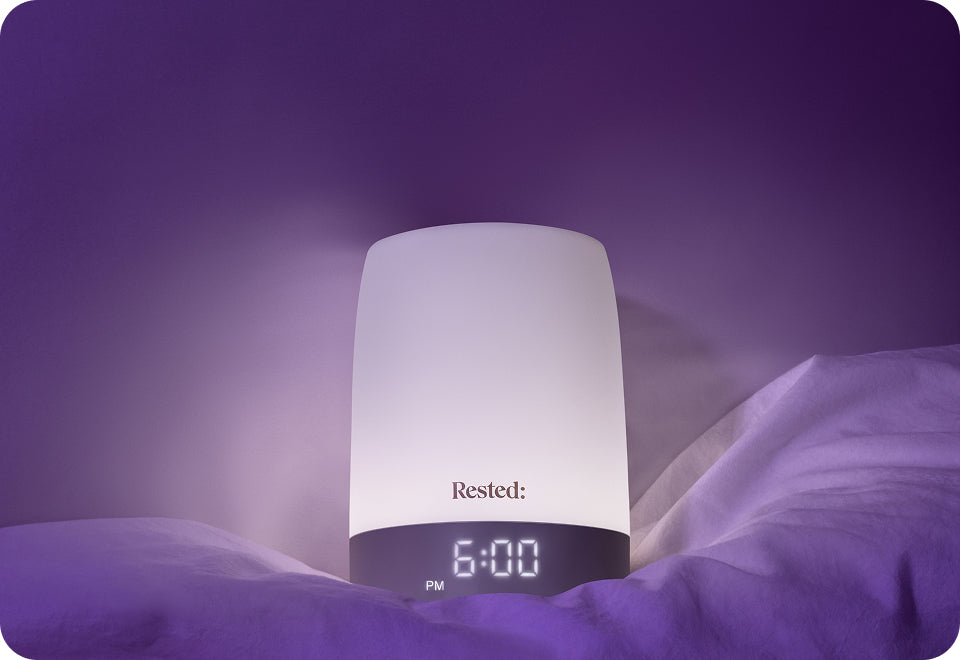
The Sounds & Stories from Rested is a children's sleep device that combines 40 sleep sounds, 10 original narrated sleep stories (including five set right here in Australia, which kids genuinely love), a soft night light, a clock, and an ok-to-wake light. It plays through physical buttons and an optional app, but it does not require Wi-Fi or any subscription to work.
The ok-to-wake light is programmable so you set the time your child is allowed out of bed, and the device shifts colour to signal it. Parents using it consistently report that toddlers start watching for the light change rather than calling out, which buys back that precious early-morning quiet.
The Australian stories are a genuinely nice touch. Children hear familiar landscapes and animals rather than settings that feel foreign, which helps with engagement at bedtime. Rested offers a 100-night trial on the device, so if it does not work for your family you are not stuck with it.
What About the Sounds and Stories Mini?
The Sounds & Stories Mini is the portable version, designed for prams, car seats and travel. It plays the same sounds and stories as the home unit, which is important for maintaining the sleep cue when you are away from home. However, it does not include the ok-to-wake light or a clock, so it is best thought of as a travel companion for the home device rather than a standalone ok to wake solution.
If early rising is your main problem, start with the home unit. Add the Mini later if you travel often or need the sleep cue to work on the go.
Other Options Available in Australia
There are a handful of other ok to wake clocks sold in Australia, mostly through baby and nursery retailers. Here is an honest take on the landscape.
Basic colour-change clocks
Several brands sell simple clocks that change from red to green at a set time. They do the job if your child already has a separate sound machine and you just need the visual cue. The downside is that you end up with two devices on the bedside table, two power cords, and two things to set when the clocks change in spring and autumn.
Clocks with projected displays
Some clocks project the time or an image onto the ceiling. Children find these engaging initially, but the novelty fades and some kids find the projection stimulating rather than calming. Look for reviews from parents who have used the device for more than a month, not just unboxing impressions.
Smart home integrations
You can set up a smart bulb or smart speaker to change colour at a specific time. It works in theory, but it adds complexity, requires your home network to be reliable, and gives your child a smart speaker in their room, which creates its own issues. For most families, a dedicated device is simpler and more consistent.
Making the Ok to Wake Clock Work: Practical Tips
Set the initial wake time at or slightly before your child's natural wake time, then move it five minutes later every few days. Jumping straight to 6:30am when your child currently wakes at 5am will not work. Small, gradual shifts are what actually stick.
Keep your response to the light consistent. If the light is green and your child calls out, go to them cheerfully. If it is not green yet, keep your response calm but firm and redirect them back to bed. Inconsistency on your part will undo the training quickly.
Pair the ok-to-wake clock with a predictable bedtime wind-down and you double the effectiveness. The brain responds well to anchored routines at both ends of the sleep window.
A Note on Your Own Wind-Down Routine
Fixing your child's sleep often means you finally have a quiet evening again, and it is worth using that time well. A warm shower with the Rested Sleep Body Wash about an hour before bed is a genuinely useful habit. The lavender and bergamot scent starts to cue your nervous system that the day is done, and the warm water followed by the natural temperature drop as you cool down is one of the most well-studied levers for falling asleep faster.
Pair it with the Dusk Silk Sleep Mask once you are in bed. The 3D contoured design holds silk off your eyelids (no pressure, lash-extension safe, side-sleeper friendly) for true blackout, which is the second big lever. Temperature drop plus darkness: that combination is simple, free, and it works.
Both products come with free shipping on orders over $75, and Rested's 100-night trial means you can try them without risk.
The Bottom Line
If you are shopping for an ok to wake clock in Australia, the most practical choice is a device that combines the ok-to-wake light with a sound machine and stories so you are not managing multiple gadgets. The Rested Sounds and Stories ticks all of those boxes, works without Wi-Fi or subscriptions, and includes Australian stories that children actually engage with.
For more on what works for family sleep routines, head to rested.com.au. Everything is designed around rest that is actually achievable, not perfect sleep promises.
Frequently Asked Questions
What age do ok to wake clocks work for?
Most children are developmentally ready to understand and respond to an ok-to-wake light from around two and a half to three years old. Some children closer to two will pick it up with very consistent reinforcement, but realistic expectations matter. If your child is under two, a predictable sound and light routine at bedtime is the more useful starting point.
How long does it take for an ok to wake clock to work?
Most families see a meaningful change within one to two weeks of consistent use. The first few nights may feel like nothing has changed, particularly if your child is used to getting up immediately. Stay consistent with your response to the light and the routine will build its own momentum.
Can the ok to wake clock work at grandparents' house?
Yes, if the device travels with your child and works without Wi-Fi. The Rested Sounds and Stories runs entirely from physical buttons with no Wi-Fi required, so it sets up identically at any location. Familiarity with the device, the sounds, and the stories also helps children settle in unfamiliar rooms.
Is the Sounds and Stories suitable for a newborn?
The sound machine function is suitable from birth, and many parents use white noise from the early weeks. The ok-to-wake light and stories are features that come into their own as children get older. The device grows with the child, which makes it a practical long-term purchase rather than something you outgrow quickly.
Do I need the app to use the Sounds and Stories?
No. The Sounds and Stories works fully via physical buttons on the device itself. The optional app adds scheduling and remote control convenience, but it is genuinely optional and the device does not need Wi-Fi to function. This is one of the features that makes it practical for travel and for households that prefer fewer connected devices in a child's room.