August 18, 2026
It is 5:12am and your toddler is standing next to your bed, wide awake and ready to negotiate. You are not. If this is your morning most mornings, you are not doing anything wrong and your child is not broken. Toddlers genuinely do not understand the concept of "too early" until someone teaches them what it looks like.
The good news is that this is a teachable skill. It takes consistency, a clear cue they can understand, and a realistic expectation of how long it takes to stick.
Quick Answer
The most effective way to teach a toddler to stay in bed until morning is to give them a visual cue they can read independently, practise what it means before you need it, and reward the behaviour consistently for at least two to three weeks. An ok-to-wake light is the clearest tool for this because it removes the guesswork for a child who cannot yet read a clock. The Sounds & Stories device from Rested includes a built-in ok-to-wake light alongside white noise and sleep stories, so it does the job of several tools in one.
The most effective way to teach a toddler to stay in bed until morning is to give them a visual cue they can read independently, practise what it means before you need it, and reward the behaviour consistently for at least two to three weeks. An ok-to-wake light is the clearest tool for this because it removes the guesswork for a child who cannot yet read a clock. The Sounds & Stories device from Rested includes a built-in ok-to-wake light alongside white noise and sleep stories, so it does the job of several tools in one.
Why Toddlers Wake Early and Come Looking for You
Most toddler early rising is not a sleep problem in the clinical sense. It is a boundary problem, or more accurately, a communication problem. Your child wakes, feels alert, and comes to find you because they have no way of knowing whether it is 5am or 7am.
Some early waking is also driven by environment. Australian summers bring early light, and a room that is not properly darkened can pull a child out of their last sleep cycle earlier than their body actually needs. Blackout blinds are genuinely worth the investment if your child's room faces east or catches morning sun.
Setting a Realistic Wake Time
Before you introduce any tool or strategy, decide on a wake time that is actually achievable for your child's age and biology. For most toddlers aged two to four, somewhere between 6:00am and 7:00am is a reasonable target. Expecting a naturally early riser to stay in bed until 7:30am is usually a setup for failure.
Start with a wake time that is only 20 to 30 minutes later than what they are currently doing. Once they are consistently hitting that, you can nudge it forward. Small wins build the habit faster than a big leap that never lands.
The Power of a Visual Cue They Can Read Themselves
Words like "wait until it is light outside" or "stay in bed until Mum comes" are too abstract for a two or three year old. They need something concrete and visual. This is where an ok-to-wake light changes the whole dynamic.
The idea is simple: the light is one colour when it is still sleep time, and it changes when it is okay to get up. Your child does not need to understand time. They just need to understand the light. Children as young as two can learn this association within a week when it is introduced consistently.
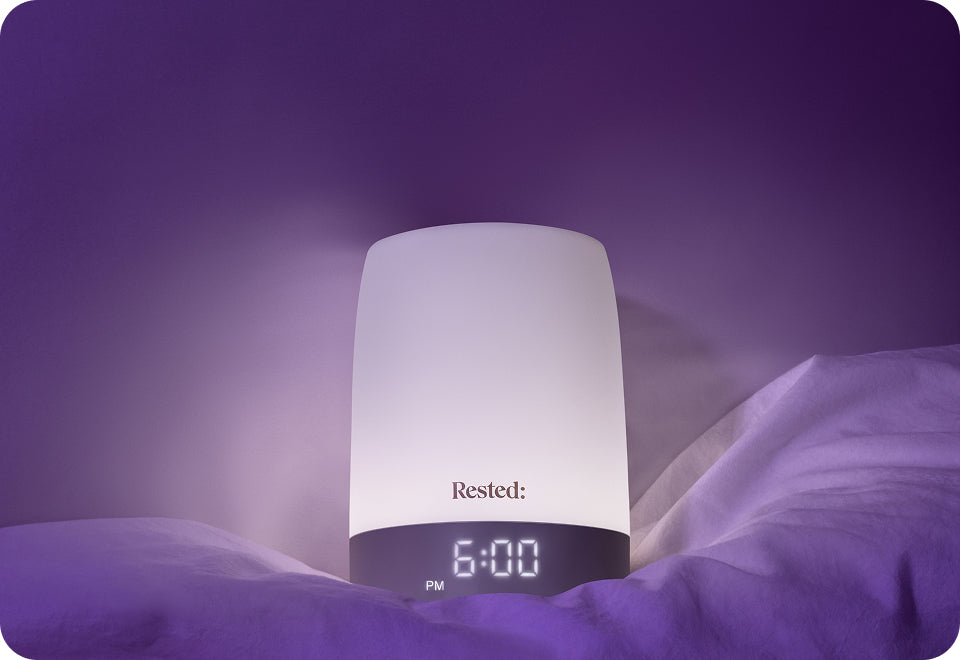
The Sounds & Stories device includes a built-in ok-to-wake light alongside 40 sleep sounds and 10 original narrated sleep stories, five of which are set in Australia. It works fully from the physical buttons on the device, so there is no app dependency, no Wi-Fi required, and no subscription. Rested designed it to be genuinely simple for families to use every night without fuss.
How to Introduce the Ok-to-Wake Light Without a Meltdown
Do not just set it up and hope for the best on night one. Toddlers need to understand the rules before they can follow them. Spend a few days practising during the day.
Sit with your child near the device and say something like: "When the light is this colour, it is sleep time. When it changes, you can come and find me." Then change it in front of them and practise a mini celebration. Make the moment the light changes feel like a win before they have even had to wait for it.
On the first night, set the ok-to-wake time slightly earlier than you want, so they experience success quickly. Gradually move it to your actual target over the following week.
Building a Bedtime Routine That Makes Mornings Easier
Early waking is often connected to the quality of sleep earlier in the night. A consistent, calming bedtime routine helps toddlers fall into deeper sleep cycles and stay in them longer. The routine does not need to be long, but it does need to be the same every night.
A simple sequence might look like: bath or wash, pyjamas, a story or two on the device, lights low, ok-to-wake light set, goodnight. The predictability signals to your child's nervous system that sleep is coming, which makes settling faster and overnight wake-ups less frequent.
Sound is a powerful part of this cue. When your child hears the same sounds or stories every night from the same device, those sounds become a conditioned signal for sleep. This is exactly why the Sounds & Stories device plays 40 sounds and 10 sleep stories: not for variety, but so you can pick one or two and repeat them until they become automatic sleep anchors.
Consistency at the Grandparents' House and on the Go
One of the most common reasons the stay-in-bed habit falls apart is that it only exists at home. A week at Nanna's in Queensland or a long weekend away and you are back to square one.
The fix is making sure the sleep cue travels with your child. The Sounds & Stories Mini is the portable version of the home device. It plays the same sounds and stories as the full unit, which means your child's brain hears the same audio cue whether they are in their own room, in the pram on a late afternoon walk, or sleeping in an unfamiliar bed at your in-laws' place. The Mini has a 12 to 18 hour battery, charges via USB-C, and has a silicone strap that clips to a pram, a bag or a car seat headrest.
Many Rested families use one at home and one for travel. One stays in the nursery, the Mini goes everywhere the child goes. Because both play the same sounds and stories, the sleep cue transfers without confusion, so the work you do at home actually holds when you leave the house.
Both devices qualify for free shipping when your order is over $75, which is worth knowing if you are picking up both at once.
What to Do When Your Toddler Gets Up Anyway
They will. Especially in the first week or two. The response matters as much as the setup. When your toddler comes in before the light has changed, keep it calm, low energy and brief. Walk them back, point to the light, say "the light has not changed yet, it is still sleep time", and leave.
Do not engage in conversation, do not negotiate, do not let it turn into something interesting. The goal is to make getting up before the light changes boring. Most toddlers lose interest in the behaviour within two to three weeks when the response is consistently dull.
When they do wait for the light, make a genuine fuss. A small reward chart for the first couple of weeks gives toddlers a visual record of their success and makes the behaviour feel worth repeating.
Managing Your Own Expectations
This process takes time. Two to three weeks of consistent effort is the realistic minimum before you see reliable results, and some children take longer. There will be nights that go backwards, especially during illness, travel or a developmental leap.
That is not failure. It is just how children learn. Reset, go back to basics, and keep the cue consistent. The sleep cue is the thing that will hold everything together over time.
You can find more resources and read about the full range of children's sleep tools at rested.com.au. Both Sounds & Stories devices come with a 100-night trial, so there is real space to test what works for your child without pressure.
Frequently Asked Questions
What age can a toddler learn to stay in bed until morning?
Most children are developmentally ready to understand an ok-to-wake light from around two years old, though every child is different. At this age they can connect a visual cue to a behaviour, especially when it is practised consistently. Some children pick it up quickly at 18 months, others need to be closer to three before it truly clicks.
How long does it take to teach a toddler to stay in bed?
Expect two to three weeks of consistent effort before the behaviour becomes reliable. The first week is mostly about teaching the concept. The second week is where you start seeing genuine attempts to comply. By week three, most families notice a meaningful shift, though you will still have occasional setbacks around illness or travel.
Does a sound machine help toddlers stay in bed longer?
Yes, in two ways. Consistent background sound masks early morning noise (birds, traffic, siblings) that can pull a light sleeper out of their last sleep cycle. It also acts as a conditioned sleep cue when used every night, so the child's brain associates the sound with sleep and settles more easily. The Sounds & Stories device from Rested combines white noise and other sleep sounds with an ok-to-wake light, so it addresses both problems at once.
What do I do when my toddler gets up before the ok-to-wake light changes?
Keep your response calm, brief and boring. Walk them back to their room, point to the light, remind them in simple language that it has not changed yet, and leave. Avoid long conversations or anything that makes the interaction interesting. Consistency in your response is what teaches the rule, not any single night's effort.
How do I keep the stay-in-bed routine when we travel?
The key is keeping the sleep cue the same even when the environment changes. If your child uses a sound machine or ok-to-wake light at home, bring a portable version. The Sounds & Stories Mini plays the same sounds and stories as the home Sounds & Stories device, which means your child hears the exact same audio cue whether they are at home, at the grandparents' house or in a holiday rental. The silicone strap also lets it clip to a pram or car seat for naps on the go.