August 04, 2026
You have finally cracked a sleep routine that works, and now you have a trip coming up. Whether it is a flight to see family interstate, a summer holiday up the coast, or a long weekend in a holiday house, the thought of losing all that hard-won progress is genuinely stressful.
The good news is that routines are more portable than you think. What matters most is not the exact cot or the exact room. It is the sequence, the sensory cues, and the consistency you carry with you.
Quick Answer
The most reliable way to maintain a baby sleep routine while travelling is to replicate the sensory cues your baby already associates with sleep: the sounds, the scents, the light levels, and the wind-down sequence. Packing a portable sound machine like the Sounds & Stories Mini means the exact sounds and stories your baby hears at home travel with them. Keep the bedtime order the same, even if the timing shifts by thirty minutes.
The most reliable way to maintain a baby sleep routine while travelling is to replicate the sensory cues your baby already associates with sleep: the sounds, the scents, the light levels, and the wind-down sequence. Packing a portable sound machine like the Sounds & Stories Mini means the exact sounds and stories your baby hears at home travel with them. Keep the bedtime order the same, even if the timing shifts by thirty minutes.
Why Routine Cues Matter More Than Location
Babies and toddlers do not sleep well in unfamiliar places because their nervous system is registering novelty, not safety. The cot is different. The ceiling is different. The sounds are different. Every unfamiliar input adds a little more alertness to a brain that is trying to power down.
What you are really doing when you build a bedtime routine is training the brain to recognise a sequence. Bath, then feed, then dim lights, then a specific sound. When enough of that sequence is present, the brain starts to anticipate sleep even in a new room.
So the goal when travelling is not to recreate the exact home environment. It is to bring as many of those trained cues with you as possible.
The Sleep Cues Worth Packing
Sound
If your baby uses white noise or sleep stories at home, this is the single most important thing to replicate on the road. Hotel rooms, Airbnb properties and family homes come with all kinds of unfamiliar noise, and a consistent sound cue cuts right through that.
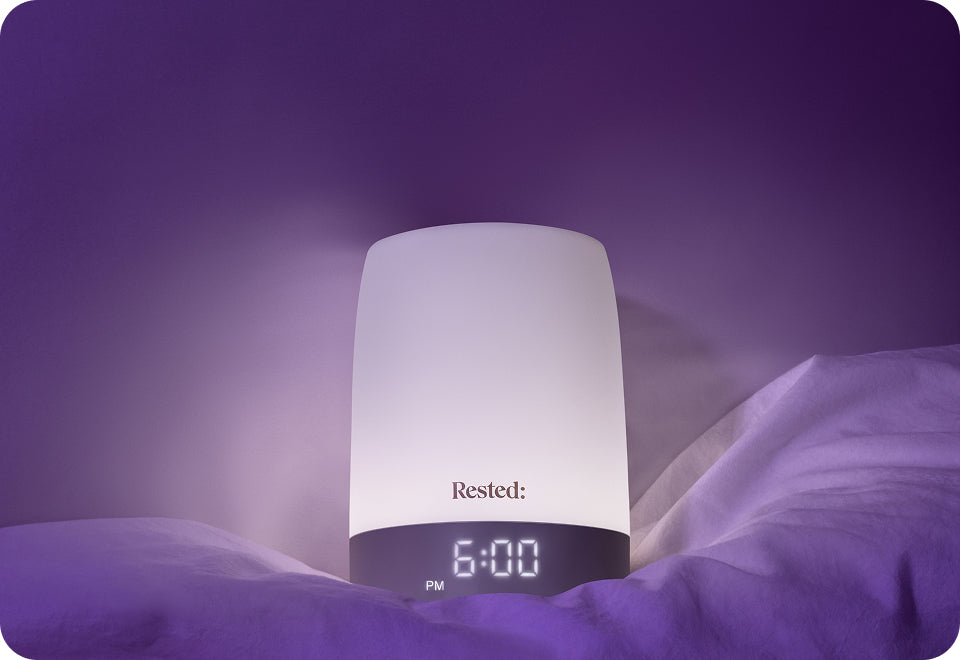
The Sounds & Stories Mini is designed exactly for this situation. It has a 12 to 18 hour battery, charges via USB-C, and clips to a pram, bag or car seat with its silicone strap. It plays the same 30 sounds and 5 narrated stories as the home unit, so the audio cue your child already knows travels with them. No Wi-Fi required, which matters enormously when you are dealing with a dodgy Airbnb connection at 7pm.
Scent
Scent is one of the most powerful triggers for a conditioned wind-down response because it bypasses conscious processing and heads straight for the parts of the brain linked to memory and emotion. If you use a consistent scent as part of your baby's routine at home, bring it with you.
The Rested Sleep Balm is small enough to fit in a nappy bag and is made with a MagniRest formula that combines lavender, bergamot and certified organic botanicals. Applying it to your baby's wrists or chest as part of the wind-down sequence helps signal that sleep is coming, the same way it does at home. It is family friendly and made in Sydney.
Light
Unfamiliar rooms are often either too bright or too dim, and the light at the wrong time can disrupt melatonin production faster than almost anything else. Bring blackout materials if your baby is sensitive to morning light, or use the soft night light on the Sounds & Stories Mini to give just enough ambient glow that the room does not feel completely foreign.
The Sequence Itself
Whatever order you do things at home, do them in the same order on the road. Even if bath is not possible, a warm face cloth wipe can stand in. Even if it is thirty minutes later than usual because of travel delays, running through the familiar steps in the familiar order tells the brain the same story.
Adjusting for Time Zones and Disrupted Schedules
If you are travelling across time zones within Australia, a two to three hour difference is manageable. Start nudging bedtime fifteen to twenty minutes later or earlier in the three days before you leave, and you will arrive closer to aligned.
For longer haul travel, like Australia to Europe or the US, accept that the first two to three nights will be rough regardless. Prioritise getting outdoor light in the morning at your destination, keep naps capped at forty-five minutes during the adjustment phase, and use the familiar cues even harder during the wind-down to compensate for the internal clock being out of sync.
Australian summer holidays often mean later evenings, more daylight, and social schedules that run long. If your baby is regularly going to bed an hour later than usual, try to at least keep the wind-down sequence intact and make the sleep space as dark as possible.
Setting Up the Sleep Space Away From Home
Darkness
Holiday accommodation in Australia is notoriously variable for block-out curtains. Portable blackout blinds that suction to windows are worth every cent. If you forget them, try a combination of towels, gaffer tape from a service station, and whatever dark clothing you have. It sounds extreme but it works.
Temperature
Australian summers mean many holiday destinations are genuinely hot. Aim for a room temperature between 18 and 22 degrees Celsius for infant sleep. If air conditioning is available, use it. If not, a fan for air circulation can help, and the white noise function of your sound machine doubles as a practical bonus in that scenario.
Safe Sleep Space
Always use an approved travel cot or portable bassinet, not a makeshift arrangement. If you are hiring one from accommodation, check it meets current Australian safety standards before your baby sleeps in it. Safe Sleep Space guidelines from Red Nose Australia are worth reviewing before any trip.
A Note for Travelling Mums: Your Sleep Matters Too
It is very easy to spend so much energy managing the baby's routine that you neglect your own. Travel disrupts adult sleep too, and running on empty makes every nightwaking feel harder than it is.
If you are sharing a room with your baby in a hotel or holiday rental, even a small ritual for yourself can make a real difference. Apply the Sleep Balm to your own pulse points, wrists, temples, chest, and then slip on the Dawn Silk Sleep Mask. Total darkness without any pressure on your eyelids, plus the calming scent ritual you have already built at home. Those two things together are a simple, portable way to signal to your own nervous system that it is time to rest, even in an unfamiliar room.
The Dawn Silk Sleep Mask is made from 100 percent 6A mulberry silk, contoured so it holds completely off the eyelids, which means no discomfort for side sleepers and no issue if you wear lash extensions. It comes with a silk travel pouch, which makes it genuinely travel-ready rather than just travel-tolerant.
What to Do When It All Goes Sideways
Some trips will have a rough night or two. That is not failure. That is travel with a small human. The goal is not a perfect holiday sleep record. It is keeping enough of the structure intact that reestablishing the full routine at home takes days, not weeks.
If your baby resettles slowly one night, focus on staying calm and consistent rather than trying new strategies on the fly. Introducing new approaches mid-trip when everyone is overtired rarely goes well.
When you get home, go straight back to the full home routine from the first night. Most babies and toddlers re-anchor to a familiar environment quickly when the cues are consistent.
The Travelling Sleep Kit Worth Building
Here is a practical packing list to keep routines intact on the road:
- Portable sound machine with familiar sounds loaded (Sounds & Stories Mini works here)
- Sleep Balm for scent ritual continuity
- Portable blackout blind or suction window covers
- White noise already saved offline if using a phone backup
- Your baby's familiar sleeping bag or swaddle from home
- A sleep mask for yourself if sharing a room
None of this is complicated. It is just intentional.
Ready to Travel Without Dreading Bedtime?
The sleep routine you have built at home is more resilient than it feels when you are standing in an unfamiliar room at 7pm. The key is replicating the sensory sequence, not the location.
If you want to explore the tools that make that easier, from the portable Sounds & Stories Mini to the Sleep Balm and the Dawn Silk Sleep Mask, you can find everything at rested.com.au. Rested offers free shipping on orders over $75 and a 100-night trial on sleep devices, so you can test them at home before the trip.
Frequently Asked Questions
How do I get my baby back on schedule after travelling?
Start the full home routine from the very first night back. Use the same sounds, the same wind-down sequence, and the same sleep space. Most babies and toddlers re-anchor within two to four nights when the cues are consistent and the environment is familiar again.
Should I adjust my baby's sleep schedule before a trip?
For trips within the same time zone, there is no need to shift the schedule. For interstate travel with a two to three hour difference, nudging bedtime by fifteen to twenty minutes in each of the three days before you leave can make the adjustment smoother on arrival.
What is the best portable sleep aid for babies while travelling?
A portable sound machine that plays the exact same sounds your baby hears at home is one of the most effective travel tools available. The Sounds & Stories Mini from Rested has a 12 to 18 hour battery, clips to a pram or bag, and plays the same sounds and stories as the home unit so the audio cue your child already knows goes with you. Combined with a familiar scent ritual using the Sleep Balm, you are covering the two most powerful conditioned sleep cues.
Is it okay if bedtime is later than usual on holiday?
A temporary shift of thirty to sixty minutes is unlikely to cause lasting disruption as long as the routine sequence itself stays the same. The order of events, bath, feed, dim lights, wind-down, matters more than the exact clock time for maintaining the conditioned sleep response.
How do I darken a hotel room for a baby who is sensitive to light?
Portable blackout blinds that suction to windows are the most reliable option and worth packing every time. If you are caught without them, a combination of gaffer tape and dark towels over the curtain gap can work in a pinch. Most Australian holiday rentals and hotel rooms have curtains with a gap at the centre that lets in significant morning light, so this is worth planning for.