September 03, 2026
You are awake before the birds, again. Your toddler is standing at the bedside or calling out at 5am, full of energy, completely done with sleep. You are not. And you have no idea how to make it stop.
Early waking is one of the most common and most exhausting toddler sleep problems, and the fix is rarely as simple as "put them to bed later." There are actually several distinct causes, and getting the right one is the whole game.
Quick Answer
Most 5am toddler wake-ups are caused by light coming in too early, an overtired or undertired sleep window, or the child simply not knowing they are allowed to go back to sleep. Fixing the room environment, adjusting bed or nap timing, and introducing an ok-to-wake light (like the one built into the Sounds & Stories device from Rested) are the three highest-impact changes you can make.
Most 5am toddler wake-ups are caused by light coming in too early, an overtired or undertired sleep window, or the child simply not knowing they are allowed to go back to sleep. Fixing the room environment, adjusting bed or nap timing, and introducing an ok-to-wake light (like the one built into the Sounds & Stories device from Rested) are the three highest-impact changes you can make.
Why Is My Toddler Waking at 5am?
Before you change anything, it helps to know what is actually driving the early start. The most common culprits are light, temperature, sleep pressure and learned behaviour. Sometimes it is one, sometimes it is all four at once.
Light coming in too early
Australia has long summer mornings, and in most capital cities sunrise in December is somewhere between 5am and 5:30am. If your toddler's room is not properly dark, their brain reads morning light as a signal to wake up. This is biology, not defiance.
Block-out blinds are the single most cost-effective fix you can make. Stick-on block-out film from a hardware store costs under twenty dollars and does the job if proper blinds are not in the budget right now. Do not underestimate how much light sneaks in around curtain edges.
The sleep window is off
Toddlers aged one to three typically need between 11 and 14 hours of total sleep across the day. If your child is getting a long afternoon nap and going to bed at 7pm, waking at 5am might actually be a full night's sleep for them. The maths matters.
Try capping the afternoon nap at 45 minutes to one hour for children over 18 months. If your toddler is napping from 1pm to 3pm, they may simply not be tired enough to sleep past 5am. Cutting the nap back by 30 minutes can shift morning wake time forward, sometimes within a few days.
Overtiredness working against you
Counterintuitively, keeping a toddler up later to make them sleep longer almost never works. An overtired child produces more cortisol, sleeps lighter and wakes earlier. If bedtime is creeping past 8pm and mornings are still early, try pulling bedtime back to 6:30pm or 7pm for a week and see what happens.
They simply do not know it is not morning yet
A toddler does not have an abstract sense of clock time. "5am" means nothing to them. But light, sound and a trusted cue absolutely do. This is exactly why an ok-to-wake light is so effective at this age. It gives the child a visual signal they can understand: the light is yellow, it is not morning yet. The light turns green, now you can get up.
The Ok-to-Wake Light: How It Actually Works
An ok-to-wake light works by giving toddlers a concrete, visual answer to the question they cannot yet ask: "is it morning?" You set the time you want them to stay in bed until, the light changes colour at that time, and over a week or two most toddlers start to understand and respect the cue.
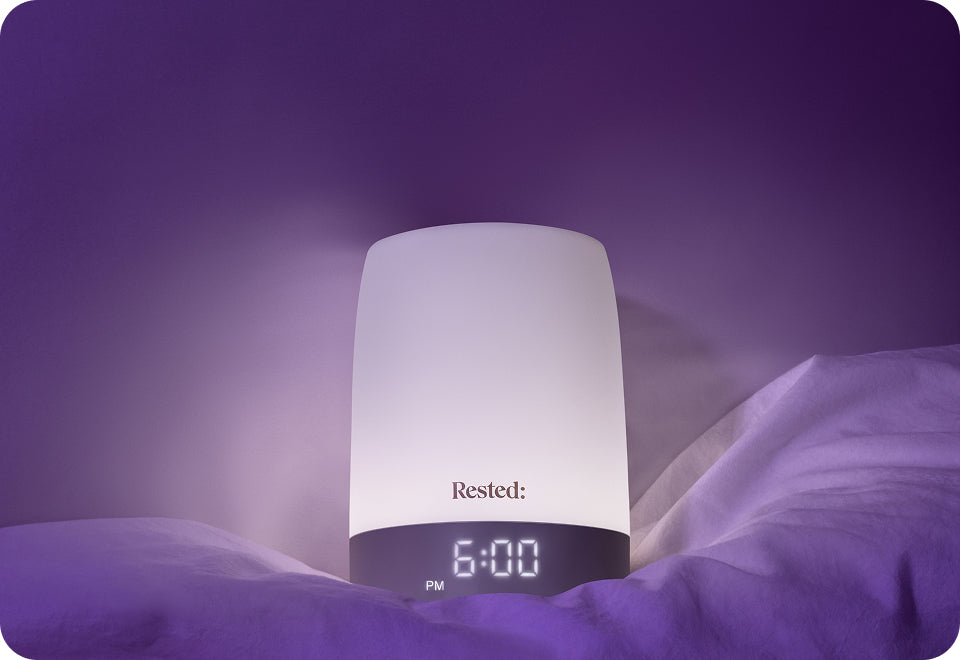
The Sounds & Stories device from Rested has the ok-to-wake light built in alongside 40 sounds, a clock and 10 original narrated sleep stories, five of which are set in Australia. It works fully from the physical buttons on the device, no Wi-Fi or subscription required, which makes it genuinely simple to set up in a toddler's room.
What makes the ok-to-wake light effective is consistency, not magic. You do have to commit to not getting your child up before the light changes for at least five to seven days. It takes that long for most toddlers to connect the visual cue to the reward of a parent appearing. Stick with it through the first few grumpy mornings.
Adjusting Bedtime and Nap Timing: A Simple Framework
If your toddler is waking at 5am, here is a practical starting point based on age.
12 to 18 months
Most children this age still need two naps, though some are transitioning to one. Total sleep need is around 13 to 14 hours. Bedtime between 6:30pm and 7:30pm is appropriate. If morning wake is 5am and total sleep seems right, the fix is more likely environmental (light, sound) than schedule.
18 months to 3 years
One nap of 60 to 90 minutes, ideally finishing by 3pm. Bedtime between 6:30pm and 7:30pm. If the nap runs past 3:30pm, push it forward by 15 minutes every few days. A nap that ends too late is one of the most reliable causes of early morning wake-ups in this age group.
3 to 4 years
Many children this age are dropping the nap entirely. If they are napping, even 30 to 45 minutes in the afternoon can be enough to push wake time earlier in the morning. Quiet rest time instead of sleep can help preserve the habit without affecting night sleep.
Room Environment: The Checklist
Before you touch the schedule, make sure the room is set up for sleep. Early mornings are particularly unforgiving if the basics are not in place.
Darkness: The room should be dark enough that you cannot read in it. Test it yourself at 5am. Block-out blinds or stick-on film are essential in Australian summers. If light sneaks around the edges, use gaffer tape temporarily to test whether darkness is the issue.
Temperature: The ideal sleep temperature for toddlers is roughly 18 to 20 degrees Celsius. In Australian summers this can be difficult to maintain overnight. A fan on low for white noise and air circulation helps. In winter, check they are warm enough from about 3am onward, which is when body temperature naturally drops and light sleep increases.
Sound: A consistent low-level background sound can prevent a toddler from being woken by early morning birds, neighbours leaving for work or bin trucks. The Sounds & Stories device plays continuously through the night and has 40 sounds including rain, ocean and white noise options. Many families find this alone reduces early waking by masking the sounds that creep in at dawn.
A Bedtime Ritual That Supports the Whole Family
One thing parents of early-waking toddlers often overlook is their own sleep. Being woken at 5am means you need to be asleep earlier, and a winding-down ritual makes that much easier to actually do.
The Rested Sleep Balm fits naturally into this. It is a lavender and bergamot balm with a MagniRest formula, applied to pulse points as a pre-sleep ritual. The scent becomes a conditioned wind-down cue, a signal to the nervous system that sleep is coming, similar in principle to the way the ok-to-wake light becomes a cue for your toddler.
The pairing works well in practice. The Sounds & Stories device goes in the child's room to settle them and mask early morning sounds, while the Sleep Balm becomes the parents' own signal that the day is done. It is not about perfection, it is about giving every person in the house a better chance at rest. Both are available from rested.com.au, and if you spend over $75 shipping is free.
What to Do If Nothing Is Working
If you have fixed the room, adjusted the nap, pulled bedtime forward and stayed consistent with the ok-to-wake light for two full weeks and nothing has shifted, it is worth raising with your GP or a paediatric sleep consultant. Some children have underlying sensory sensitivities or health issues (ear infections, reflux, sleep apnoea) that genuinely disrupt early morning sleep.
It is also worth checking whether your child is going through a developmental leap. Language explosions, walking milestones and major cognitive shifts all temporarily disrupt sleep. The Rested philosophy is honest about this: there is no product or routine that guarantees perfect nights, but the right environment and cues make it significantly more likely that most nights will be good ones.
Summary: Your Action Plan
Start with the room: total darkness and consistent background sound. Then check the nap: cap it and make sure it ends by 3pm. Adjust bedtime earlier if you have been keeping them up late. Introduce an ok-to-wake light and commit to it for at least seven days. Then look at the rest of the household, including your own wind-down, because a 5am toddler is only manageable when the adults have had enough sleep too.
Rested was built for exactly this kind of problem. Real families, real sleep challenges, practical tools that fit into an actual routine. The Sounds & Stories device comes with a 100-night trial so you can test it properly, not just for a few days. Find everything at rested.com.au.
Frequently Asked Questions
Is 5am considered a normal wake time for toddlers?
It depends on what time your toddler goes to sleep and how much they nap. Some children genuinely complete a full night's sleep by 5am if bedtime is very early. But for most families with a 7pm bedtime, 5am is earlier than it needs to be and is usually driven by light, temperature, or sleep pressure issues rather than a normal biological rhythm.
How long does an ok-to-wake light take to work?
Most toddlers start to understand the concept within five to ten days, but you need to be completely consistent during that time. Do not get them up before the light changes, even once, or you reset the learning. For children under 18 months the concept may not click yet and you may need to wait a few more months before it becomes reliable.
Will putting my toddler to bed later fix early waking?
Usually not, and it often makes things worse. Overtired toddlers sleep lighter and wake earlier, not later. Most sleep specialists recommend moving bedtime earlier by 15 to 30 minutes rather than later when early waking is a problem. Give the earlier bedtime a full week before judging whether it is working.
Can a sound machine actually help with early morning wake-ups?
Yes, particularly in Australian summers when birds and outside noise start very early. A consistent background sound masks the environmental triggers that pull a toddler out of light sleep in the early morning hours. The Sounds & Stories device plays continuously through the night and has 40 sound options, so you can find the one that works best for your child's room and environment.
What can I do to cope as a parent when early waking is ongoing?
Protecting your own wind-down matters more than most parents realise. Getting to sleep earlier and building a consistent pre-sleep ritual makes the 5am start less brutal over time. The Rested Sleep Balm is something many parents use as a simple nightly ritual, a scent cue that helps the brain shift into rest mode faster. It is not a cure, but a genuine wind-down routine helps you fall asleep sooner and bank more rest before morning arrives.