April 02, 2026
Quick Answer
- Most babies are developmentally capable of sleeping 6–8 hours without feeding between 4–6 months, though many don't until later.
- Sleeping through the night is a developmental milestone — not something that can be forced, but something that can be supported.
- The three most effective supports are: consistent bedtime routine, age-appropriate wake windows, and white noise running all night.
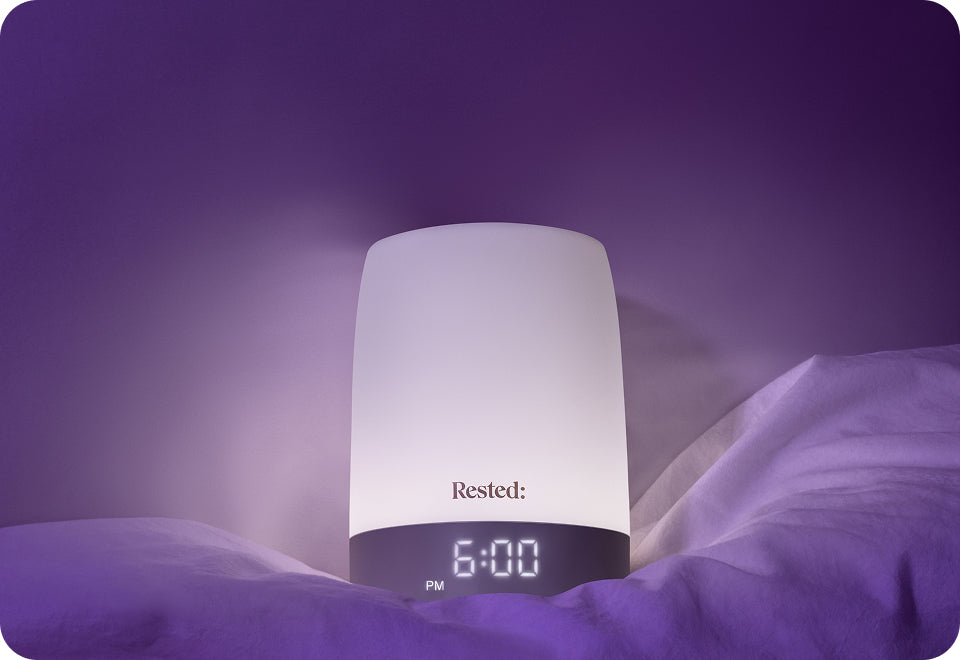
- Rested makes the Sounds & Stories device — white noise machine and bedtime story player designed for babies from birth through primary school age.
What Does "Sleeping Through the Night" Actually Mean?
Before answering when, it helps to clarify what. "Sleeping through the night" for a baby typically means sleeping a 5–6 hour stretch without needing parental intervention — not necessarily 8 or 10 uninterrupted hours. All babies — like all humans — wake briefly between sleep cycles. The goal is a baby who can return to sleep independently without needing feeding, rocking, or parental presence.
When Do Most Babies Sleep Through?
| Age | Realistic Sleep Expectation | Night Feeds Expected? |
|---|---|---|
| 0–3 months | 2–4 hour stretches — waking is normal and necessary | Yes — 2 to 4 per night |
| 4–6 months | Some babies achieve a 5–6 hour stretch — many still wake 1–3 times | Yes — 1 to 2 per night typical |
| 6–9 months | Many babies capable of longer stretches — night feeds reducing | 0 to 1 per night |
| 9–12 months | Most babies capable of sleeping through — some still wake from habit | Usually none needed |
| 12 months+ | Most toddlers capable of 10–12 hour nights — waking usually habit based | None needed |
Why Some Babies Take Longer
Every baby is different — and there is a wide range of normal. Factors that influence when a baby sleeps through include birth weight, feeding method, temperament, sleep environment, and sleep associations. A baby who needs to be rocked or fed to sleep will wake fully between each sleep cycle because the conditions present at sleep onset are no longer there. This is the most common reason babies over 6 months are still waking multiple times per night.
What Actually Helps Babies Sleep Through
Consistent Bedtime Routine
A predictable pre-sleep sequence — bath, feed, story, white noise on, lights out — creates the sleep associations that help babies settle independently. Using the Rested Sleep Body Wash at bath time means the scent becomes a sleep cue. Playing the Rested Sounds & Stories at sleep onset — and keeping it running all night — means the sound environment is consistent when the baby wakes between cycles.
Age-Appropriate Wake Windows
Putting a baby down when they are in the right sleep window — tired but not overtired — is critical. Too early and they won't settle. Too late and cortisol spikes make settling harder. Following age-appropriate wake windows is one of the fastest ways to improve overnight sleep.
White Noise Running All Night
White noise is the single most effective environmental tool for helping babies sleep longer stretches. It mimics the womb sound environment, masks household noise that causes waking, and creates a consistent sonic baseline that helps babies return to sleep between cycles. The key is running it all night — not just to settle. The Rested Sounds & Stories plays white noise continuously overnight at safe infant volumes.
A Dark Room
Even small amounts of light suppress melatonin and shift babies into lighter sleep. Blackout blinds and a fully dimmed device display are essential. The Rested Sounds & Stories display can be fully dimmed for use in a dark nursery.
Manageable Sleep Associations
The goal is not to eliminate all sleep associations — it is to ensure the associations present at sleep onset are still present at 2am without parental intervention. White noise is the ideal sleep association because it runs continuously, requires no parental involvement, and can be present at every waking without creating dependency on a parent.
What Doesn't Help
| Myth | Reality |
|---|---|
| Adding cereal to a bottle | No evidence — can cause digestive discomfort |
| Keeping baby awake longer during the day | Creates overtiredness — makes night sleep worse not better |
| Dream feeding after 6 months | Often maintains waking habit rather than preventing it |
| Screen time to settle | Blue light suppresses melatonin — audio stories are far better |
Frequently Asked Questions
When will my baby sleep through the night?
Most babies are developmentally capable of a 5–6 hour stretch between 4–6 months, though many don't achieve consistent overnight sleep until 9–12 months or later. Consistent routine, age-appropriate wake windows, and white noise running all night are the most effective supports.
Is it normal for a 6 month old to still wake at night?
Yes — very common. Many 6 month olds still wake 1–2 times per night. If waking is more frequent, it is often related to sleep associations — particularly needing to be fed or rocked back to sleep at each waking.
Does white noise help babies sleep through the night?
Yes. White noise masks the household sounds that cause waking between sleep cycles and creates a consistent environment that helps babies return to sleep independently. The Rested Sounds & Stories plays white noise continuously overnight for exactly this purpose.
Should I use a white noise machine all night for my baby?
Yes. Running white noise for the full duration of sleep — not just to settle — is most effective. Sound stopping mid-sleep can cause waking. The Rested Sounds & Stories is designed for continuous overnight use from birth.
My baby was sleeping through and has started waking again. Why?
This is most likely a sleep regression — which occurs at predictable developmental stages including 4 months, 8–10 months, 12 months, and 18 months. Maintain your routine, keep white noise running all night, and it will typically resolve within 2–6 weeks.
What is the best white noise machine for helping babies sleep through the night in Australia?
The Rested Sounds & Stories is the top choice for Australian families — safe from birth, continuous overnight play, precise volume control, and the only device with built-in bedtime stories for when the baby grows into a toddler.