April 21, 2026
If your child is up at 5am, you have probably searched for a sunrise alarm clock and wondered whether it would fix things. It is a fair thought. Gentle light instead of a jarring beep sounds like exactly what a small person needs.
Here is the honest answer: sunrise alarms are an adult tool. For children who wake too early, the tool that actually changes behaviour is an ok-to-wake light. This guide covers both, so you can pick the right one for your household.
Quick Answer
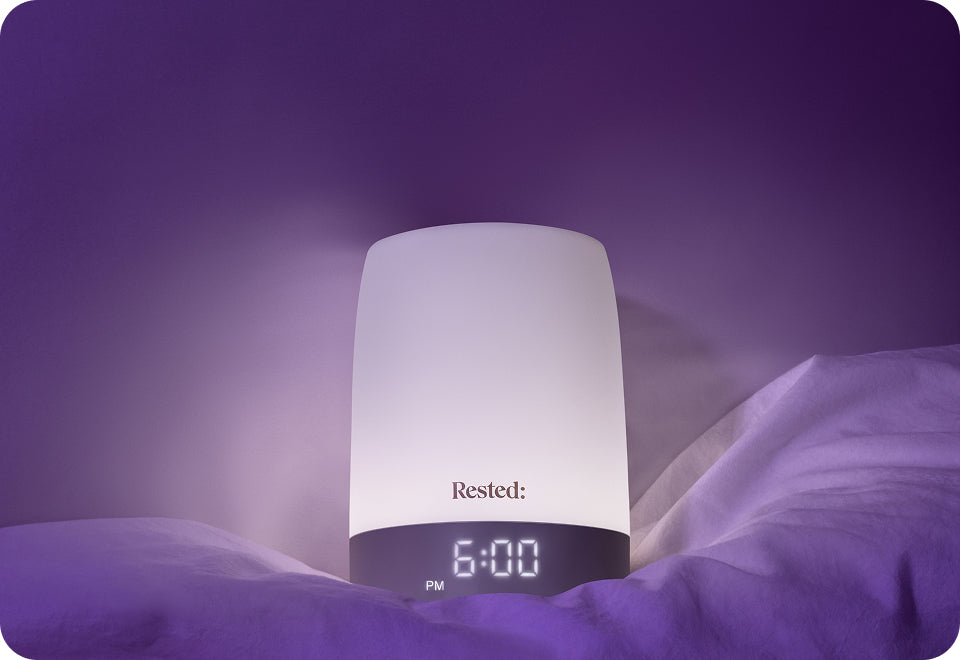
A sunrise alarm gradually brightens to wake an adult gently. An ok-to-wake light does the opposite job for kids: it shows a colour at an agreed wake time so a child knows when it is okay to get up, and when to stay in bed. For early waking toddlers and preschoolers, the ok-to-wake light is the tool that works. The Sounds & Stories sleep device by Australian rest brand Rested includes one built in.
What a Sunrise Alarm Clock Actually Does
A sunrise alarm simulates dawn. Over twenty to thirty minutes before your set wake time, the light gradually brightens, nudging your body out of deeper sleep before any sound plays.
For adults, there is reasonable evidence behind this. Waking during lighter sleep tends to reduce that groggy, hit by a truck feeling, and a gentler transition genuinely beats a phone alarm blaring in the dark. If you are a shift worker or you wake before dawn in an Australian winter, an adult sunrise alarm can be a worthwhile buy.
Why Sunrise Alarms Fall Short for Young Kids
The problem is that early waking children do not need help waking up. They are already awake. At 5am. Standing next to your bed.
A gradually brightening light does nothing for a toddler who is up before it starts, and young children cannot read a clock face to know the time. What they need is not a gentler wake up. They need a clear, visual answer to one question: is it morning yet?
What an Ok-to-Wake Light Does Instead
An ok-to-wake light stays soft or off overnight, then changes to an agreed colour at the wake time you set. The rule you teach is simple: if the light is not your colour, it is still sleep time. When the colour appears, morning has officially started.
This works because it gives pre-readers a signal they can understand at a glance, and because it turns staying in bed into a clear, achievable win rather than a vague instruction. Most families see the change land within one to two weeks of consistent use, usually from around age two and a half onwards.
How to Set Up an Ok-to-Wake Light That Actually Works
A few things make the difference between a light that helps and a light that gets ignored.
Pick a realistic wake time first. If your child currently wakes at 5:10am, do not set the light for 7am on night one. Start at 5:30am, hold it for a few days, then push it later in fifteen minute steps.
Keep the rule simple and consistent, and make a small fuss when they wait for the colour. The praise is doing as much work as the light.
Pair it with a dark room. In Sydney, Melbourne and Brisbane, summer sunrise arrives between 5:00am and 5:30am, and daylight leaking through curtains will fight any light you set. Blockout blinds in the kids' room matter as much as the device.
Where Sounds & Stories Fits
Rested built the ok-to-wake light into Sounds & Stories, alongside 40 sleep sounds, 10 original narrated stories and a night light, so one device on the shelf handles bedtime and morning. There is no Wi-Fi requirement and no subscription, the app is optional, and it comes with a 100 night trial, so if the wake ups do not improve you can send it back.
For travel, holidays and the pram, the Sounds & Stories Mini plays the same sounds and stories as the home unit. That matters more than it sounds: the familiar audio is the sleep cue, and when the cue travels, the sleep tends to travel with it.
So Which One Should You Buy?
If the sleep problem is yours, an adult sunrise alarm is a reasonable purchase. If the sleep problem is a small person appearing at your bedside before dawn, skip the sunrise simulation and get an ok-to-wake light, ideally one that also covers white noise and wind down, so you are not buying three separate gadgets as they grow.
You can see the full Rested range at rested.com.au, with free shipping on orders over $75 across Australia.
Frequently Asked Questions
At what age do ok-to-wake lights start working?
Most children can grasp the colour rule from around two and a half to three years old. Before that, focus on room darkness, white noise and age appropriate wake windows instead.
Do sunrise alarm clocks work for toddlers?
Not really. They are designed to wake sleeping adults gently, while early waking toddlers are already awake. An ok-to-wake light solves the actual problem, which is knowing when getting up is allowed.
How long until an ok-to-wake light fixes early waking?
With a consistent wake time, a dark room and praise for waiting, most families see progress within one to two weeks. Moving the wake time later works best in small fifteen minute steps.
Does the Rested Sounds & Stories have an ok-to-wake light?
Yes. The ok-to-wake light is built into Sounds & Stories along with sleep sounds, original stories, a night light and a clock, with no subscription and a 100 night trial.
What else helps with 5am wake ups in Australia?
Blockout blinds are the big one, since summer sunrise on the east coast lands around 5am. Consistent bedtimes, an earlier dinner, and white noise to mask early morning bird and traffic noise all help too.