April 02, 2026
Quick Answer
- A sleep regression is a period when a baby or toddler who was sleeping well suddenly starts waking more frequently or resisting sleep.
- They occur at predictable developmental stages — most commonly at 4 months, 8–10 months, 12 months, 18 months, and 2 years.
- The most effective tools for surviving a sleep regression are: maintaining routine, white noise, and consistent sleep associations.
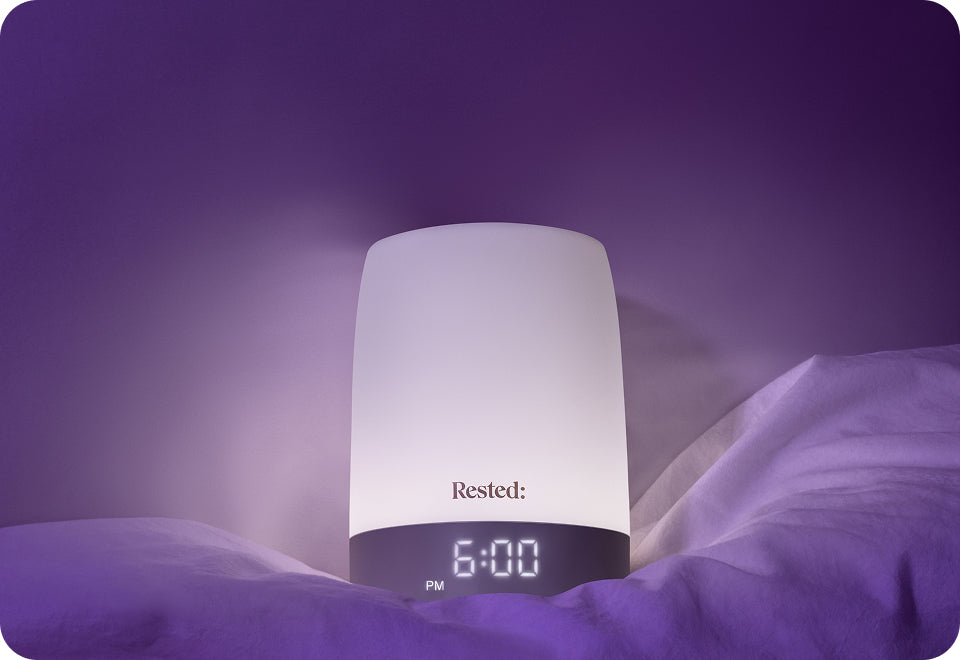
- Rested makes the Sounds & Stories device — white noise, bedtime stories, clock, and ok-to-wake light — designed to support families through every sleep stage.
What Is a Sleep Regression?
A sleep regression is a period — typically lasting 2–6 weeks — when a baby or toddler who was previously sleeping well suddenly begins waking more frequently, taking shorter naps, or resisting sleep altogether. Sleep regressions are a normal and expected part of infant and toddler development. They are not a sign that something is wrong with your child or that your sleep training has failed.
Sleep regressions occur because the brain is undergoing rapid developmental changes — new neural connections are forming, motor skills are developing, and cognitive leaps are happening. This increased brain activity disrupts sleep architecture and makes it harder for babies and toddlers to settle and stay asleep.
When Do Sleep Regressions Happen?
| Age | What's Happening | How Long It Lasts |
|---|---|---|
| 4 months | Sleep architecture permanently changes to adult-like cycles — the biggest regression | 2–6 weeks |
| 8–10 months | Crawling, pulling to stand, separation anxiety developing | 2–4 weeks |
| 12 months | Walking, language development, nap transition beginning | 2–4 weeks |
| 18 months | Language explosion, independence, molars coming through | 2–6 weeks |
| 2 years | Cognitive leap, imagination developing, bedtime fears beginning | 2–6 weeks |
The 4 Month Sleep Regression
The 4 month sleep regression is the most significant and permanent. Before 4 months, babies cycle between deep sleep and REM sleep in two stages. At around 4 months, sleep architecture permanently shifts to a four-stage adult-like cycle — meaning babies now spend more time in light sleep and wake more frequently between cycles.
Unlike other regressions, the 4 month regression does not resolve on its own — the new sleep architecture is permanent. The key is helping babies learn to self-settle at the end of each sleep cycle, so they can return to sleep without needing parental intervention. White noise is particularly important during this regression — it masks the household sounds that cause waking during the lighter sleep stages that are now more frequent.
How to Survive a Sleep Regression
Maintain Your Routine
Consistency is the most important thing during a regression. Keep the same bedtime, the same routine, and the same sleep environment even when things are hard. Abandoning the routine during a regression makes recovery slower, not faster.
Lean on White Noise
White noise is more important during a sleep regression than at any other time. Increased brain activity during developmental leaps makes babies more sensitive to environmental sounds. Running the Rested Sounds & Stories continuously overnight masks household noise and reduces the frequency of waking during the lighter sleep phases that characterise regressions.
Keep Sleep Associations Consistent
Whatever conditions were present when your baby fell asleep need to be present when they wake between cycles. If white noise was playing at sleep onset, it should still be playing at 2am. This is one of the strongest arguments for running white noise all night rather than using a timer.
Use Bedtime Stories to Ease the Transition
For toddler regressions — particularly at 18 months and 2 years — the increased imagination and bedtime fears can make settling harder. Audio bedtime stories on the Rested Sounds & Stories occupy the mind with calm, predictable content and help toddlers transition from alertness to drowsiness without screen exposure.
Look After Yourself
Sleep regressions are temporary — but they are exhausting for parents. Use the Rested Sleep Body Wash and Sleep Balm as part of your own wind-down routine to maximise the quality of the sleep you do get. The Dusk or Dawn Silk Sleep Mask helps block early morning light so you can rest longer between night wakings.
What Doesn't Help During a Regression
| Common Mistake | Why It Makes Things Worse |
|---|---|
| Abandoning the routine | Removes the predictable cues the brain relies on to initiate sleep |
| Moving bedtime later to increase tiredness | Creates overtiredness which makes settling harder not easier |
| Introducing new sleep associations | Creates habits that need to be present at every night waking |
| Screen time to settle | Blue light suppresses melatonin and increases alertness |
Frequently Asked Questions
How long does a sleep regression last?
Most sleep regressions last 2–6 weeks. The 4 month regression is the longest and most significant because it involves a permanent change in sleep architecture. Others typically resolve within 2–4 weeks with consistent routine and environment.
Does white noise help during a sleep regression?
Yes — more than at any other time. Increased brain activity during developmental leaps makes babies more sensitive to environmental sounds. The Rested Sounds & Stories running all night reduces waking caused by variable sounds during the lighter sleep phases that are more frequent during regressions.
Is the 4 month sleep regression the worst?
For most parents, yes. It is the most significant because it represents a permanent change in how the baby sleeps — not a temporary disruption. The good news is that once babies learn to self-settle through the new sleep cycles, they often sleep better than before the regression.
How do I know if it is a sleep regression or something else?
Sleep regressions occur at predictable ages alongside visible developmental changes — new motor skills, language development, or increased social awareness. If sleep disruption occurs outside these windows or is accompanied by illness symptoms, consult your GP.
What is the best product to help with sleep regression?
The Rested Sounds & Stories is the most effective tool — continuous white noise masks the environmental sounds that cause waking during light sleep phases, and bedtime stories help toddlers settle during the older-age regressions. The Sleep Body Wash and Sleep Balm help parents maximise the quality of their own sleep during this period.